



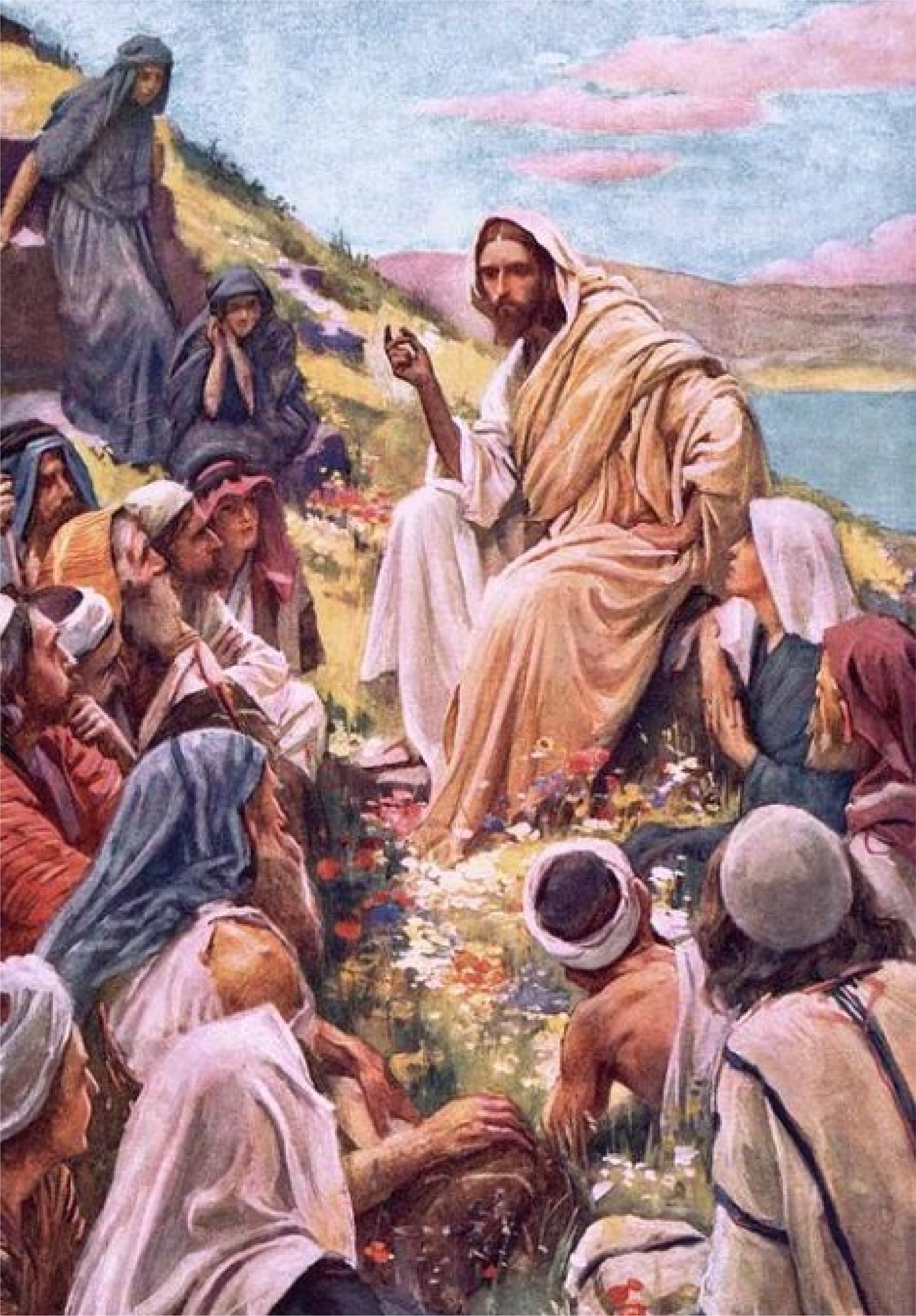
Week 6 Day 4
 Listen:
Love of the Lord
True Christian Religion 409
Before the Lord came into the world scarcely anyone knew what the internal man is or what charity is, and this is why in so many places He taught brotherly love, that is, charity; and this constitutes the distinction between the Old Testament or Covenant and the New. That good ought to be done from charity to the adversary and the enemy the Lord taught in Matthew:
You have heard that it has been said to them of old time, Thou shalt love thy neighbor and hate thine enemy. But I say to you, love your enemies, bless them that curse you, do good to them that hate you, and pray for them that hurt you and persecute you; that you may be sons of your Father who is in the heavens (Matt. 5:43-45).
And when Peter asked Him how often he should forgive one sinning against him, whether he should do so until seven times, He replied:
I do not say to thee, until seven times, but until seventy times seven (Matt. 18:21, 22).
And I have heard from heaven that the Lord forgives to everyone his sins, and never takes vengeance, nor even imputes sin, because He is love itself and good itself. Nevertheless, sins are not thereby washed away, for this can be done only by repentance. For when He told Peter to forgive until seventy times seven, what will not the Lord do?
True Christian Religion 43
It is the essence of love to love others outside of oneself, to desire to be one with them, and to render them blessed from oneself. The essence of God consists of two things, love and wisdom; while the essence of His love consists of three things, namely, to love others outside of Himself, to desire to be one with them, and from Himself to render them blessed. And because love and wisdom in God make one, as has been shown above, the same three things constitute the essence of His wisdom; and love desires these three things, and wisdom brings them forth.
[2] The first essential, which is to love others outside of oneself, is recognized in God’s love for the whole human race. And for its sake, God loves all things that He has created, because they are the means; for when the end is loved, the means also are loved. All men and things in the universe are outside of God, because they are finite and God is infinite. The love of God goes forth and extends not only to good men and good things, but also to evil men and evil things; consequently, not only to the men and things in heaven but also in hell, thus not only to Michael and Gabriel but also to the devil and satan; for God is everywhere, and is from eternity to eternity the same. He also says:
That He makes the sun to rise on the good and on the evil, and sends rain on the just and on the unjust (Matt. 5:45).
But the reason why evil men continue to be evil, and evil things continue to be evil, lies in the subjects and objects themselves, in that they do not receive the love of God as it is, and as it is inmostly in them, but as they themselves are; in the same way as thorns and thistles receive the heat of the sun and the rain of heaven.
[3] The second essential of the love of God, which is a desire to be one with others, is recognized in His conjunction with the angelic heaven, with the church on earth, with everyone there, and with everything good and true that enters into and constitutes man and the church. Moreover, love viewed in itself is nothing but an endeavor towards conjunction. Therefore, that this aim of the essence of love might be realized, man was created by God into His own image and likeness, with which a conjunction is possible. That the Divine love continually seeks conjunction is evident from the Lord’s own words:
That He wishes them to be one, He in them and they in Him, and that the love of God might be in them (John 17:21-23, 26).
[4] The third essential of the love of God, which is to render others blessed from Himself, is recognized in eternal life, which is the endless blessedness, happiness, and felicity that God gives to those who receive into themselves His love. For as God is love itself, so He is blessedness itself; for all love breathes forth delight from itself, and the Divine love breathes forth blessedness itself, happiness, and felicity to eternity. Thus God from Himself renders the angels blessed, and men after death; and this He does by conjunction with them.
Arcana Coelestia 1812
[W]hile He lived in the world, the Lord was in continual combats of temptations, and in continual victories, from a constant inmost confidence and faith that because He was fighting for the salvation of the whole human race from pure love, He could not but conquer. This is what is meant here by “believing in Jehovah.”
From the love from which anyone fights, it is known what his faith is. He who fights from any other love than love toward the neighbor and toward the Lord’s kingdom, does not fight from faith, that is, does not “believe in Jehovah,” but in that which he loves, for the love itself for which he fights is his faith. For example: he who fights from the love of becoming the greatest in heaven does not believe in Jehovah, but rather in himself. For to desire to become the greatest is to desire to command others; thus he fights for command; and so in all other cases. And thus from the love itself from which anyone fights, it may be known what his faith is.
[2] But in all His combats of temptations, the Lord never fought from the love of self, or for Himself, but for all in the universe, consequently, not that He might become the greatest in heaven, for this is contrary to the Divine Love, and scarcely even that He might be the least; but only that all others might become something, and be saved.
Questions and Comments
- How do these descriptions of the Lord’s love instruct us in understanding the teachings in Matthew 5 to love our enemy?
- How does our capacity and ability to love differ from the Lord’s? How is it similar? What is our responsibility to love, given the Lord’s love?
| previous |  |
next |
|---|