



Week 2 Day 2
 Listen:
Thou Shalt Not Commit Adultery
True Christian Religion 313
In the natural sense, this commandment means not only not to commit adultery, but it refers also to willing and doing obscene things and thinking and speaking about lascivious things. That merely to lust is to commit adultery, is evident from the Lord’s words:
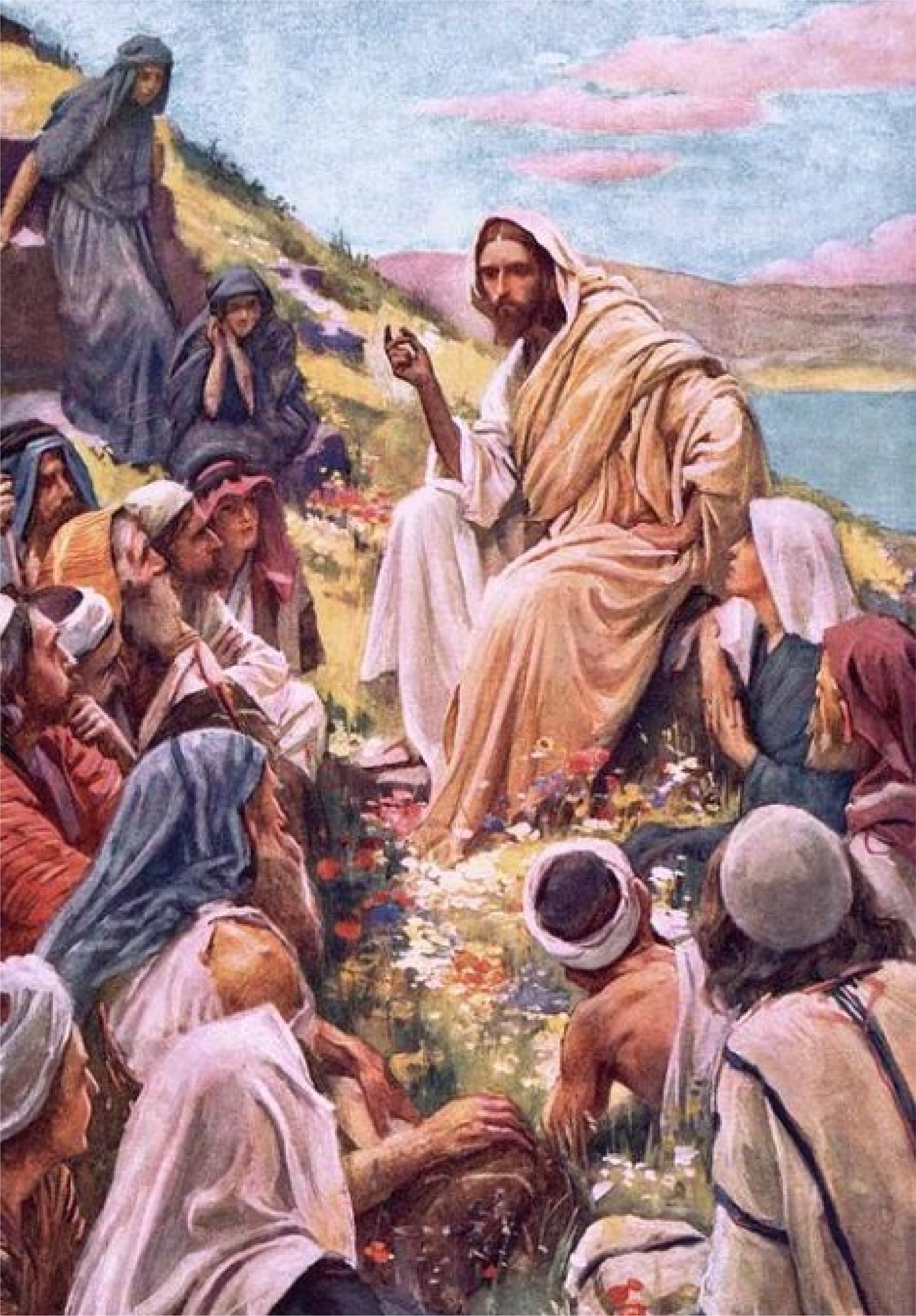
You have heard that it was said by them of old time, Thou shalt not commit adultery. But I say to you that everyone that looks on another man’s wife to lust after her has committed adultery with her already in his heart (Matt. 5:27, 28).
The reason for this is that when lust enters the will it becomes, as it were, a deed; for allurement enters into the understanding only, but intention enters into the will, and the intention of a lust is a deed.
True Christian Religion 314
In the spiritual sense, “to commit adultery” means to adulterate the goods of the Word and to falsify its truths. That “to commit adultery” means this also has been unknown until now, because up to this time, the spiritual sense of the Word has been concealed.
True Christian Religion 315
In the celestial sense, “to commit adultery” means to deny the holiness of the Word, and to profane it. This meaning follows from the preceding spiritual meaning, which is to adulterate its goods and to falsify its truths. The holiness of the Word is denied and profaned by those who in heart ridicule all things of the church and of religion, for in the Christian world all things of the church and of religion are from the Word.
True Christian Religion 316
There are many causes which make a man to seem chaste, not only to others but also to himself, when, in fact, he is wholly unchaste; for he does not know that when a lust occupies the will, it is a deed, and it cannot be removed except by the Lord after repentance.
A man is not made chaste by abstaining from doing, but by abstaining from willing because it is a sin, when the doing is possible. Just so far as anyone abstains from adulteries and whoredoms, solely from fear of the civil law and its penalties; from fear of the loss of reputation and thus of honor; from fear of the diseases arising from them; from fear of the wife’s upbraidings at home, and the consequent intranquility of life; from fear of the vengeance of the husband and relatives, or of being beaten by their servants; or because of avarice, or any infirmity caused by disease or abuse or age or any other cause of impotence; even if he abstains on account of any natural or moral law, and not at the same time on account of spiritual law; he is nevertheless inwardly an adulterer and a fornicator. For he nonetheless believes that adulteries and whoredoms are not sins, and therefore he does not in his spirit make them unlawful before God; and thus in spirit he commits them, even if he does not commit them in the body before the world. And in consequence, when after death he becomes a spirit, he speaks openly in favor of them.
Furthermore, adulterers may be compared to covenant-breakers who violate compacts; also to the satyrs and priapi of the ancients, who roamed in forests, crying out, “Where are there virgins, betrothed maidens, and wives, to have fun with?” Moreover, in the spiritual world adulterers actually appear like satyrs and priapi.
Questions and Comments
- How is the lust of adultery removed by repentance?
- How does one examine oneself as to the will? (See True Christian Religion 532-534.)
- How do we shun an evil as a sin in the will, after self-examination? (See True Christian Religion 535.)
| previous |  |
next |
|---|